Bet on the future
- Next-gen graphics API support
- Photorealistic rendering & VR ready
- Multi-threaded
- Fully customizable to your needs
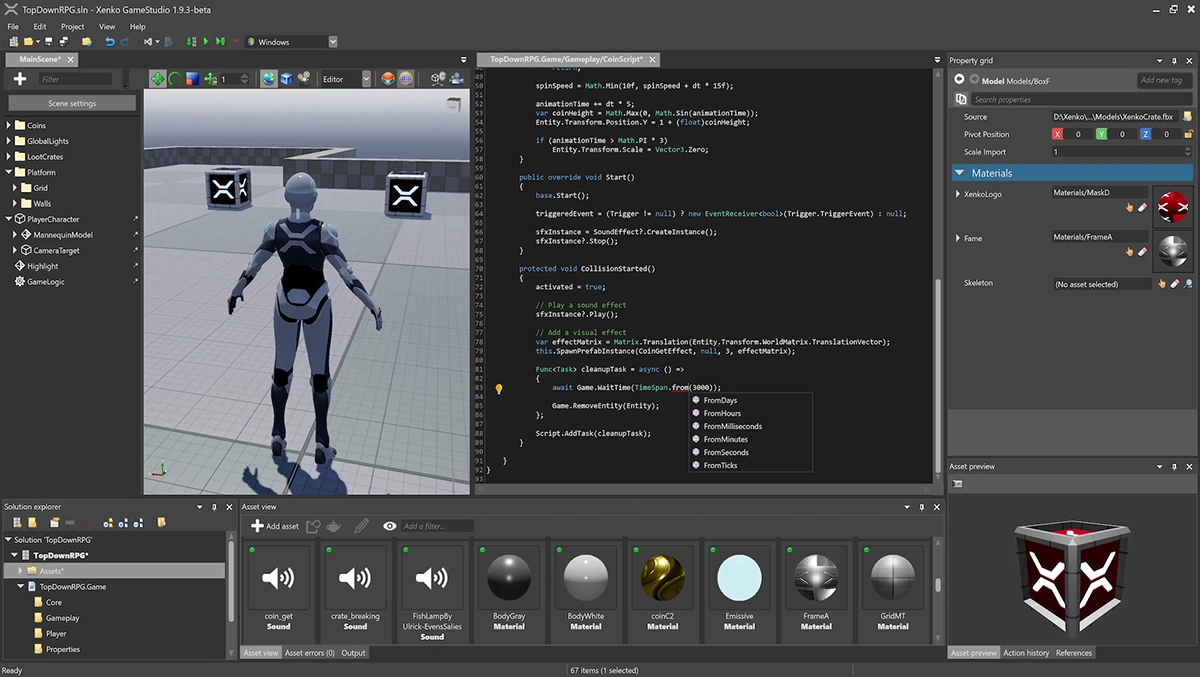
Accelerated development
- C# 14 scripting with .NET 10
- Built-in game templates
- Full asset creation toolchain
- Flexible and customizable rendering pipeline
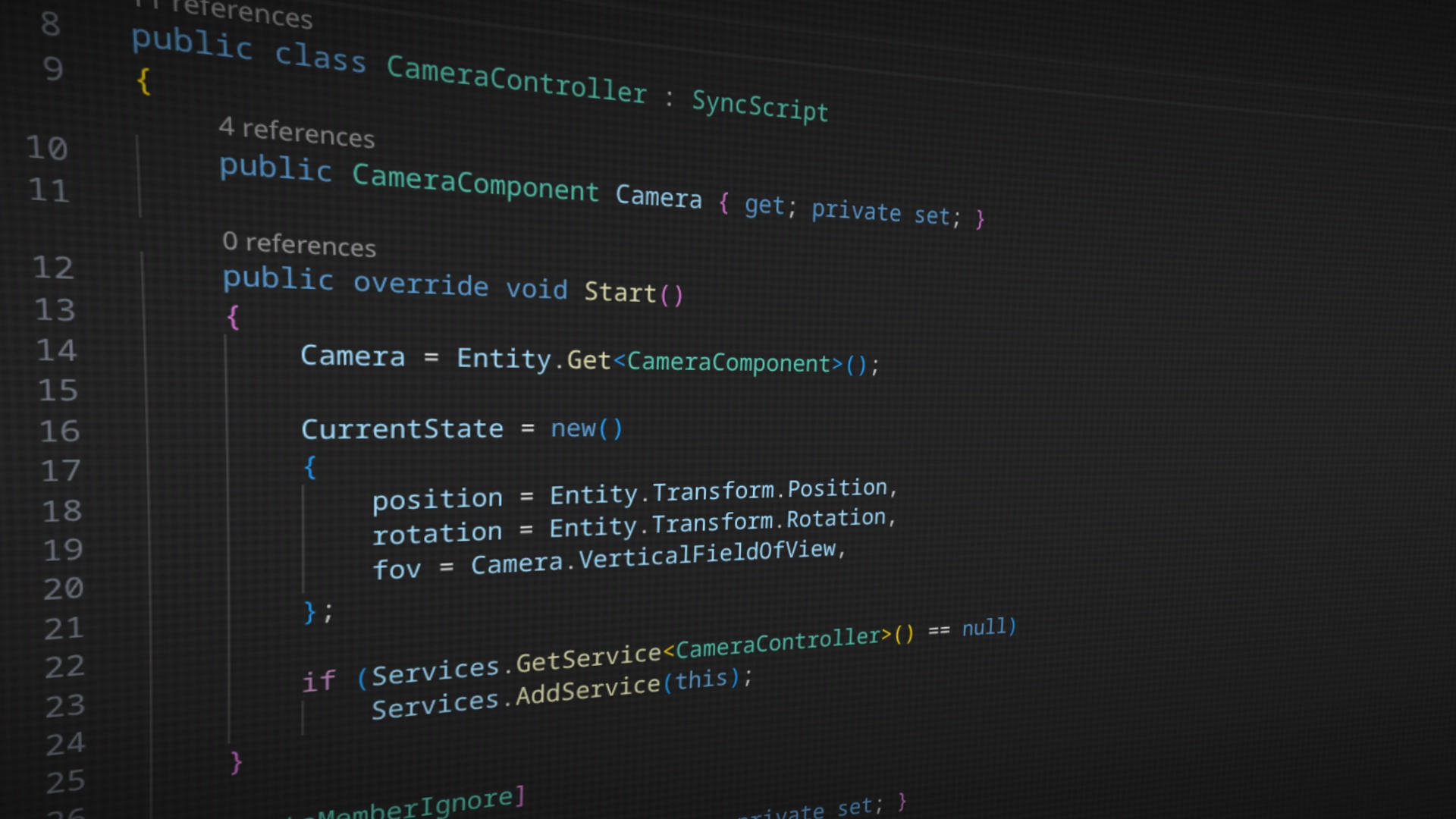
Write your scripts in C# 14
- IntelliSense and code navigation for C#
- Visual Studio, Visual Studio Code or Rider
- Game Development in .NET 10
- Long-term code maintainability

Collaborate with us
- Editor and runtime fully open source
- Dive into our source code (MIT) on GitHub
- Connect with Stride game engine community
- Propose changes to the engine, website and documentation
Too high level for you? Try Silk.NET.
Stride takes care of most of the low-level game logic for you, and while the engine is fairly modular, you may prefer having full control over those bits of your engine. If that's the case, have a look at Silk.NET! Silk.NET is a powerful set of bindings supported by the .NET Foundation for multimedia applications.